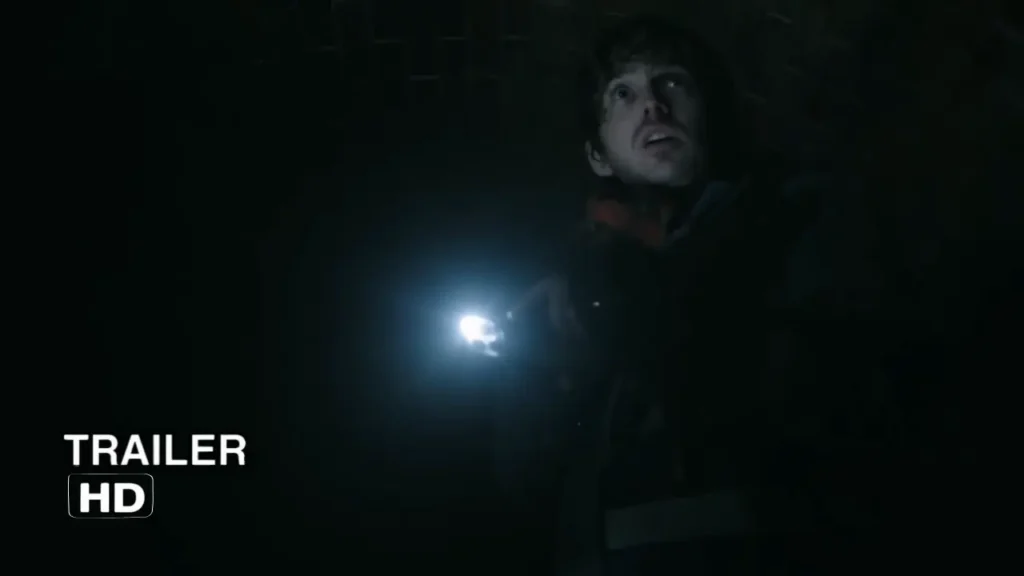
The confirmed Resident Evil movie cast includes Austin Abrams as Bryan, Paul Walter Hauser in an undisclosed role, Zach Cherry as a scientist, Kali Reis as a former military character, and Johnno Wilson. None of the characters from the previous six films or the game series appear in this story. Cregger has stated this was a deliberate choice to protect established game characters rather than risk misrepresenting them on screen.
NEXORA
VERSE
New Resident Evil Movie 2026: Release Date, Cast, Story, and What to Expect
Yes, there is a new Resident Evil movie 2026 coming and it is unlike any adaptation the franchise has produced before. After the critical disappointment of Welcome to Raccoon City (2021) and the cancellation of the 2022 Netflix series, Constantin Film and Sony’s Columbia Pictures have handed the keys to director Zach Cregger for a full reboot. The Resident Evil movie 2026 release date is confirmed as September 18, 2026, with a global theatrical run including IMAX. Here is everything currently known.
Why The Return of Leon S. Kennedy Was Never the Plan
Many fans assumed the reboot would finally put Leon S. Kennedy at the center of a live-action film worthy of the character. Cregger chose a different path, and his reasoning is worth understanding.
Leon’s story a rookie Raccoon City cop arriving on his first day straight into the T-virus outbreak, navigating the police station, meeting Ada Wong, uncovering Umbrella’s conspiracy, and reaching the underground NEST laboratory — is already one of gaming’s most complete narratives. Rather than compress or reimagine it, Cregger decided to leave it alone. As he told GamesRadar+, “Leon exists in the games. I don’t want anyone to ruin that for me. I figure if I am honoring the games, I’m just going to tell another story that feels like playing in the world of the game, but I’m not stepping on the toes of any of Leon’s storyline.”
The 2026 film is set during the same catastrophic night in Raccoon City, running concurrently with the events of Resident Evil 2 — but through a completely original civilian perspective. For longtime fans, this means familiar horrors are happening simultaneously somewhere in the same city. For newcomers, it works as a standalone survival horror story with no prior knowledge required. It is a structurally smart decision that keeps the game canon intact while opening cinematic space the franchise has never explored.
New threats face every survivor in Raccoon City, not just the iconic ones.
Director and Cast

Gritty and Dark Atmosphere
Every previous live-action Resident Evil film eventually drifted toward action spectacle. The Paul W.S. Anderson series gave audiences bullet-time choreography and a superhuman lead. Welcome to Raccoon City aimed for game fidelity but struggled to sustain tension. Cregger is building something tonally different.
He has described the film as closer in spirit to Evil Dead II than to his own previous work — relentless, practical horror with momentum that never fully releases. He drew specifically from the design logic of Resident Evil 2, translating game mechanics into narrative structure. Resource scarcity, item management, weapon progression from basic firearms to heavier equipment, and the anxiety of not knowing what is in the next room are all being adapted as cinematic devices rather than treated as backdrop.
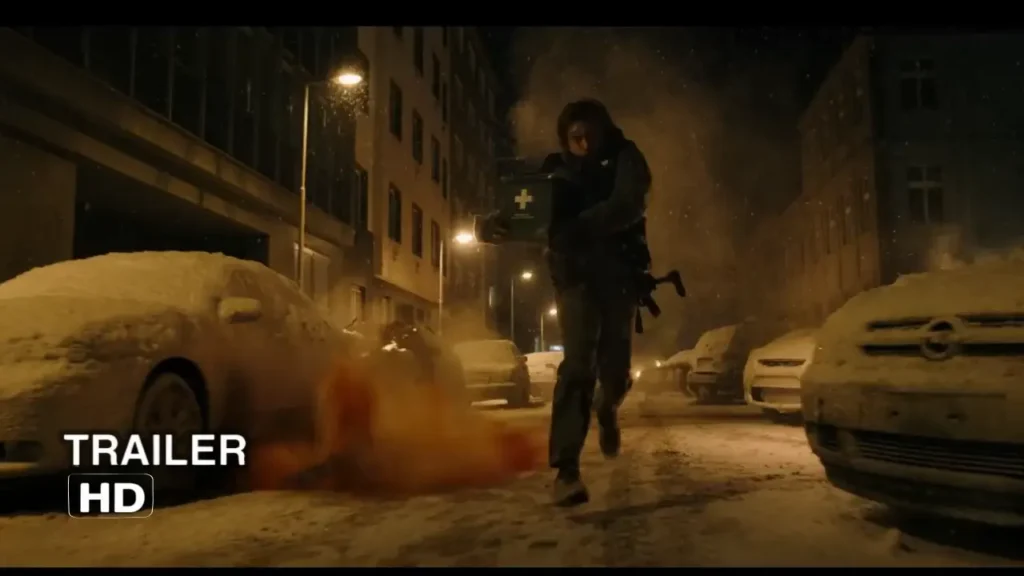
The film takes place almost entirely in a single night. That constraint is deliberate. Speaking to PlayStation Blog, Cregger confirmed he wrote the story to run concurrently with the Raccoon City outbreak in Resident Evil 2, but from a different vantage point. The IMAX release suggests the visuals — built in Prague’s gothic urban environment — are designed to be genuinely immersive rather than incidentally large.
One area worth noting: some fans, after seeing the early trailer, felt the footage looked more like pure horror than a Resident Evil film — no familiar characters, no STARS insignia, no obvious Umbrella branding. That reaction is worth taking seriously. Whether Cregger’s tonal gamble lands for the broader audience remains to be seen.
The Umbrella Corporation Legacy
To understand why Resident Evil is considered a billion dollar IP — the film franchise has grossed over 1.2 billion dollars globally across seven films — you have to understand what made Umbrella compelling in the first place. The corporation was never just a villain. It was a pharmaceutical and bioweapons company that embedded itself in government, military, and law enforcement, conducting experiments that were catastrophic and deliberately concealed.
The viruses at the center of Resident Evil are specific and consequential. The T-virus is a mutagenic retrovirus developed as a biological weapon, capable of reanimating dead tissue and producing the B.O.W.s — Biological Organic Weapons — that define the franchise’s horror. The G-virus, developed by scientist William Birkin inside Umbrella’s NEST facility under Raccoon City, produced a parasitic organism capable of autonomous evolution. What happens to Albert Wesker in Resident Evil 1 is itself a product of Umbrella’s work — Wesker, STARS’ own captain and secretly an Umbrella agent, staged his death in the Spencer Mansion using a prototype virus, emerging physically enhanced and no longer bound by ordinary human limitations.
The 2026 film retains the T-virus outbreak and the Umbrella Corporation as foundational elements, according to IBTimes. Bryan, as a civilian courier, encounters Umbrella’s consequences without the context agents like Leon have. He does not know what viruses are being released or why the city is collapsing. That ignorance is part of what makes his position so precarious and so filmable.
Modern Monsters and Practical Effects
Cregger has been direct about de-emphasizing zombies. Speaking to IGN, he explained: “This movie doesn’t utilize zombies that much. It’s much more focused on the weird creature stuff… I just feel like, you have this opportunity for the T-Virus to do all these really fascinating things to the human body, and to the world around you, and so to just limit it to zombies feels like a squandered opportunity.”
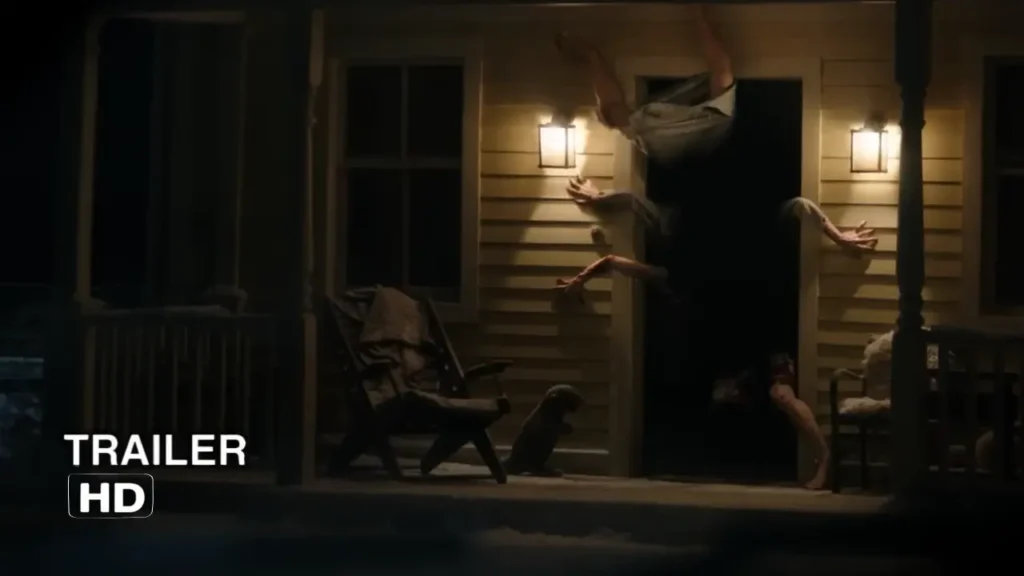
Test screening reports from World of Reel indicated that practical effects dominate the monster sequences — a significant creative signal in an era when digital creature work has become the default. The trailer revealed at least three distinct creature types, each apparently reflecting different stages of T-virus mutation. Cregger has cited Resident Evil 2, Resident Evil 3: Nemesis, and Resident Evil 4 as the primary game references for the film’s creature design logic.
Practical effects matter here for a specific reason. Survival horror movies earn their tension through physicality. When creatures have actual weight and texture, when actors react to something genuinely present in the space, the performances ground the horror in a way digital work often cannot replicate. Whether the final cut maintains this balance between practical and CGI will be one of the more closely watched craft elements on release.
Release Date and Expectations
The Resident Evil movie 2026 release date is September 18, 2026, theatrical and IMAX. Distribution is handled by Columbia Pictures globally, with pre-existing agreements covering German and French territories separately.
Four studios competed for distribution rights when the film was announced — Warner Bros., Netflix, and others alongside Sony. Sony’s willingness to commit to a full theatrical release, rather than divert the film to streaming, reflects confidence in its commercial prospects. Sony Pictures Motion Picture Group president Sanford Panitch described Cregger as “one of the most talented exciting new directors to come on the scene in many years,” calling this one of their most important releases of 2026.
The original 2002 Resident Evil film earned 102.9 million dollars on a 33 million dollar budget, launching a franchise that grew to over 1.2 billion dollars. Welcome to Raccoon City fell short of that precedent. The 2026 film is entering a healthy theatrical horror market — people are actively searching for what is a new horror movie worth watching, and the genre has performed reliably when given proper theatrical support. Whether this film converts franchise skeptics alongside the core fanbase is the open question heading into September.
As for related questions circling online — no, there is no confirmed Resident Evil 9 game tie-in film, and no official Resident Evil 7 movie adaptation is in development. The 2026 film is a standalone reboot, not a direct continuation of any single game entry.
FAQs
Is there a new Resident Evil movie coming out?
Yes. Resident Evil (2026) is directed by Zach Cregger and written by Cregger alongside Shay Hatten. It is a full reboot of the live-action film series, unconnected to previous films. Columbia Pictures will distribute it globally, with a confirmed theatrical and IMAX release on September 18, 2026.
Is there a new Resident Evil movie coming in 2026, and what is the release date?
The Resident Evil movie 2026 release date is September 18, 2026. It will open in standard theaters and IMAX simultaneously. A trailer was debuted by Cregger at CinemaCon in April 2026 and subsequently released online. The Resident Evil new movie trailer is currently available and shows the film’s ground-level survival horror tone, centered on a single night in Raccoon City during the T-virus outbreak.
Is there a Resident Evil 9 coming, and does the 2026 film connect to the games?
No confirmed Resident Evil 9 game-to-film adaptation is in development. The 2026 film is not a direct adaptation of any numbered game entry. It is an original story set within the game universe, running concurrently with the events of Resident Evil 2 during the Raccoon City outbreak, but following a new character rather than Leon, Claire, or any established game protagonist. Cregger confirmed in an April 2026 PlayStation Blog interview that the film takes place during the same night as Resident Evil 2, from a different perspective.
Is the Resident Evil 7 movie coming?
There is no Resident Evil 7 movie in announced development. Resident Evil 7: Biohazard, the 2017 game that shifted the series to a first-person perspective and a Louisiana bayou setting, has not been announced as a film adaptation. The 2026 theatrical film draws more heavily from the classic Raccoon City games — particularly Resident Evil 2, Resident Evil 3: Nemesis, and Resident Evil 4 — as confirmed by Cregger in multiple interviews.
What was the first Resident Evil movie, and how does the 2026 film compare?
The original Resident Evil movie was released in 2002, directed by Paul W.S. Anderson and starring Milla Jovovich as Alice, a character created exclusively for the films. It grossed 102.9 million dollars worldwide on a 33 million dollar budget and launched a six-film series that collectively earned over 1.2 billion dollars globally. The Resident Evil movie cast across those films included Sienna Guillory as Jill Valentine, Ali Larter as Claire Redfield, and Shawn Roberts as Albert Wesker, among others. The 2026 reboot shares none of that continuity. It is built around an entirely new protagonist, Bryan (Austin Abrams), and is intended to establish a fresh direction for the franchise closer to the tone and design logic of the original Capcom games.