Describe a Movie and Find It: The Story and Science Behind Nexora Verse Tools
Part 1: The Frustration & The “Why”
The Midnight Scroll Problem: You Know the Movie, But Not the Name
It’s 1 AM. You’re lying in bed, phone in hand. And suddenly radom movie comes in your mind. You remember it clearly that: he’s running through a rainy city. Some woman is waiting for him at a train station. The whole vibe is sad but beautiful. The music was insane. You watched it maybe 3 years ago on some random streaming app.
But the name? You Completely don’t know the name of movie.
So, you do what like every normal person does. You open Google or Youtube and type something like “sad movie man running rain train station.” And results showes you nothing useful. Just IMDb lists, Reddit threads from 2015, and some random blog talking about 10 romantic movies that have absolutely nothing to do with what you’re thinking of.
You try Facebook. You try Twitter. You even ask your group chat at 1 AM. Nobody knows even everyone starts guessing wrong movies and there’s a whole argument about whether it’s “La La Land” or “500 Days of Summer.”
That’s the midnight scroll problem. If you’ve never been stuck in it, honestly I don’t believe you. This happens to millions of people every single day. Not just at midnight. It happens when you’re with your friends and trying to pick something to watch movie. It happens when you’re recommending a movie to someone and your brain just refuses to cooperate.
It happens when you are writing something and you need to reference the movie.The frustration isn’t just about forgetting the name. It’s about knowing the feeling of the movie, knowing the scenes, knowing the vibe, and having zero way to search for it. Because the normal search engines only understand exact keywords.
They don’t understand feelings. They don’t understand “that movie where everything feels hopeless but somehow you leave feeling okay.” This gap between what your brain remembers and what search engines can find? That’s exactly the problem NexoraVerse Tools was built to fix.
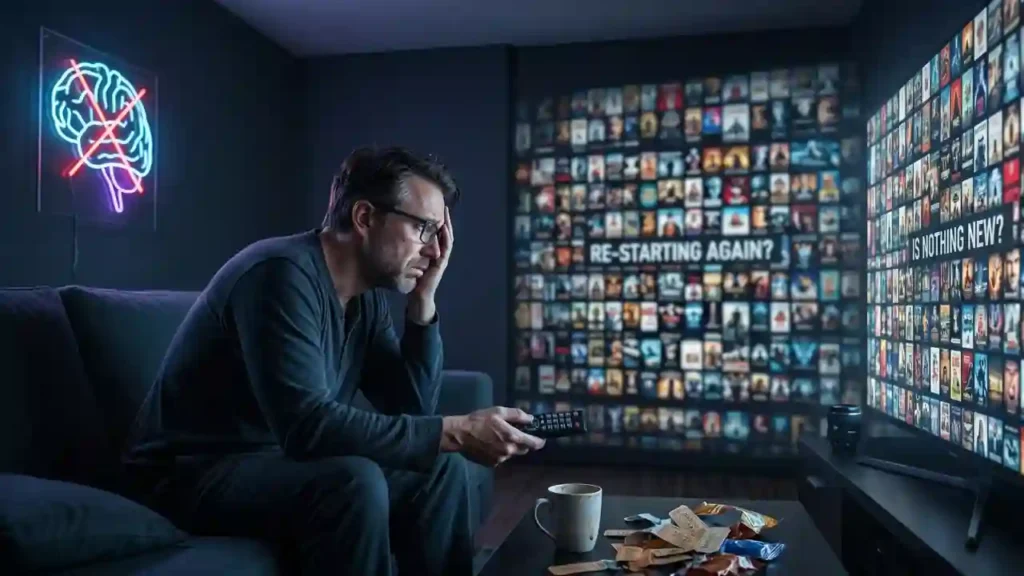
The Forgotten Movie Trauma: Why Your Brain Remembers Feelings, Not Titles
According to Neuroscience, your brain stores memories in layers. The emotional layer gets locked in first and stays the longest. The factual layer, names, dates, titles, that fades way faster. So, when you watched that movie 3 years ago and cried during the ending, your brain saved the feeling.
The color grading. The music. The general shape of the story. But the title? That’s just a random string of words. Your brain didn’t think it was important enough to keep on the front shelf. This is why you can describe a movie perfectly but not remember what it’s called.
You remember “that animated movie where the rat cooks in a French restaurant” way better than you remember “Ratatouille.” The description lives in your head and the title doesn’t. Old search technology was built for the opposite. It was built assuming you already know the name and just need directions to it. Type the exact title, get the exact result. Clean and simple.
But what about when you don’t know the title? What about when all you have is “that thriller where the twist at the end made me feel sick but in a good way” or “that horror movie with the red door and the little girl”?
People have literally described this as a trauma. This is not a joke. There are forum posts going back to 2009 of people frustrated to tears because they can’t find a movie they half-remember from childhood. One person spent 11 years trying to find an animated film they watched once when they were 7. Eleven years.
That’s not a small problem. That’s a real human experience that nobody was solving properly. And that’s where Nexora VerseTools steps in.
The Birth of Movies finder tools: Built for the People Who Feel Movies, Not Just Watch Them
It came from the same frustration you just read about. Someone who watches movies not just for entertainment but for the feeling. The kind of person who remembers exactly how a scene made them feel but couldn’t for the life of them remember the director’s name. The kind of person who’d rather describe the ending than look up the Wikipedia summary.
The idea was simple but the execution was not. What if you could just describe a movie the way you’d describe it to a friend? Not in keywords and not in exact quotes. Just in plain, messy, human language. “That movie where the dad goes looking for his son across the ocean with a fish who has memory problems.” And guess what? Your movie name are in front of you.
This is the core idea that you describe it. The tool finds it. But NexoraVerse Tools didn’t stop at description. Because the team understood something most tech products miss entirely. People remember movies in different ways.
Some people remember dialogue. Specific lines that stuck with them. “You can’t handle the truth.” Three words and you know exactly which movie that is.
Some people remember the plot. The general shape of the story. Boy meets girl, loses girl, does something insane to get her back, gets her back. Some people remember images. A specific scene. A specific look. A poster they saw once at a bus stop.
And some people remember nothing except a vague description. “That foreign film with the old woman and the goats. Very sad. Won some award I think.” finder movie tools was built to handle all of it. Find movie by description. Find movie by plot. Find movie by quote. Find movie by image. Like four different doors into the same house.
Part 2: The Magic Behind the Tool (How It Works)
Breaking Traditional Search Bars: Why Google Can’t Do What NexoraVerse Tools Does
I can explian why Google fails at this. Not because Google is bad. Google is incredible at what it does. But what it does and what you need when you’re trying to find a movie by description are two completely different things.
Google uses keyword matching. It looks for the exact words you typed and finds pages that contain those words. If you type “man rain train sad movie” Google will find every page on the internet that contains those words near each other. Which could be anything. A news article about train delays. A Wikipedia page about rain symbolism in film. A Reddit post from 2018.
It doesn’t understand that you’re describing a feeling. It doesn’t know that “sad but beautiful” is a genre in itself. It can’t connect “a guy running through a city” to a specific film because that description fits about 4,000 movies.
forgot movie title plot search tool works completely differently. It’s not doing keyword matching. It’s doing meaning matching. When you type your description into movie finder by description tool, it doesn’t just pull out keywords. It reads the whole thing. It understands context. It picks up on tone.
It notices emotional cues. “Sad but hopeful” means something different than “sad and bleak.” The tool gets that distinction. Then it goes into its database and doesn’t just look for movies with matching keywords. It looks for movies whose entire profile, plot, tone, themes, mood, matches the shape of what you described.
This is a completely different kind of technology. And it’s why find movie by line tool can find a movie when you type something as vague as “that horror movie where the family moves into a house and things start with small weird stuff before getting really bad.” That description matches dozens of horror films technically. But the tool narrows it down based on the specific combination of details you gave.
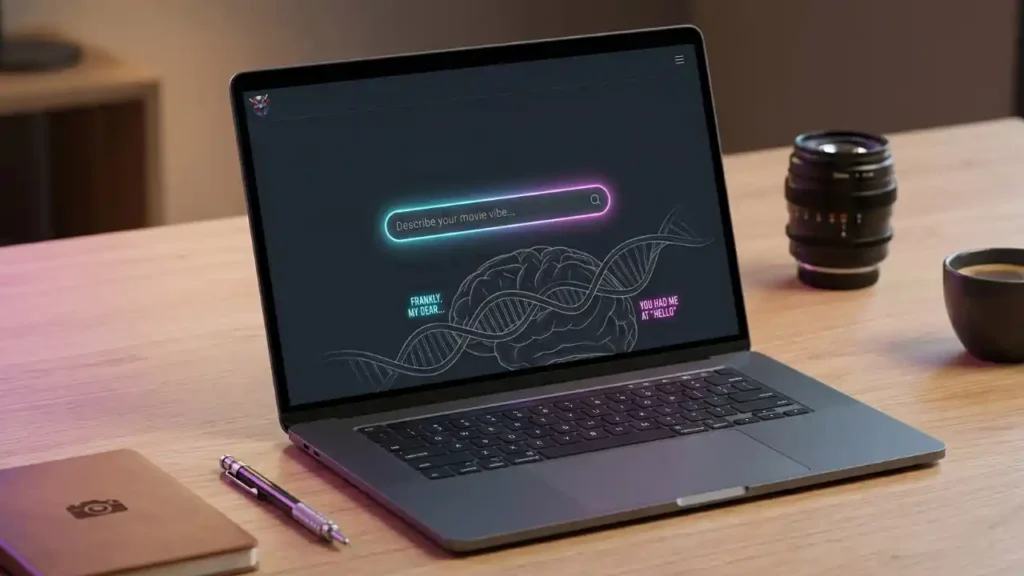
The Vibe-Check Algorithm: When the Tool Understands Mood, Not Just Words
I typed in something like “a movie that feels like being lost but in a peaceful way, slow, beautiful shots. Probably European.” And it came back with results that actually matched that feeling. Not just movies set in Europe. Movies that actually have that slow, drifting, lost-but-okay quality.
That’s the vibe-check algorithm at work.
Most movie databases tag films with genre labels like action, comedy, drama, thriller. These labels are useful but incredibly limited. Because “drama” covers everything from a quiet Japanese film about a dying woman to a loud Hollywood courtroom movie. Both are dramas. They feel nothing alike.
Nexora VerseTools goes deeper than genre labels. It pulls from reviews, critic analysis, viewer descriptions, scene breakdowns, and a mountain of data about how people emotionally describe and react to films. It builds a mood fingerprint for every movie in its database.
So when you describe a vibe instead of a plot, the tool can match your description to movies with a similar mood fingerprint. It’s not magic. It’s pattern recognition working at a very deep level.
This is why movie finder by description actually works on Nexora Tools in a way it doesn’t work anywhere else. Because the tool isn’t just searching for movies. It’s understanding what you mean.
The Dual Power: Finder vs Matcher (Two Tools in One)
It’s not just one tool. It’s two tools running together. The Finder mode is what you use when you’ve forgotten a specific movie. You describe it and the tool finds it. The Matcher mode is different. You give it a movie you already love and it finds movies with a similar feel.
Not just “movies in the same genre.” Not just “movies by the same director.” Movies that actually feel similar. Similar pacing. Similar emotional weight. Similar themes. This is the similar movie finder function and it’s honestly one of the most useful things on the whole platform.
Because streaming recommendations are broken. Every platform recommends you stuff based on what you already watched on that platform. Netflix recommends you Netflix shows. It doesn’t know about that indie film from 2003 that you’d absolutely love.
Its algorithm is designed to keep you on Netflix, not to actually find you the best match for your taste. NexoraVerse Tools doesn’t have that conflict of interest. It’s not trying to sell you a subscription to anything. It just finds the best match.
Hollywood, Bollywood, Korean cinema, French New Wave, whatever. If it fits your vibe, it shows up. The dual power of Finder plus Matcher is what makes this more than just a “I forgot the name of a movie” tool. It’s a full film discovery engine.
Part 3: Practical Use Cases
How to Use “Describe & Find” Like a Pro: Stop Typing Keywords, Start Talking
Most people open film plot search tool and do the same thing they’d do on Google. They type short, choppy keywords. “Action movie 2019 heist.” And then they wonder why the results feel generic.
That’s not how this tool works. And once you understand the right way to use it, everything changes.
Think of it like texting a friend who has watched every movie ever made. You wouldn’t text that friend “action heist 2019.” You’d say something like “you know that movie where this crew of like 5 people plans a robbery and everything goes perfectly until the last 20 minutes and then it all falls apart in the most unexpected way? I think it was set in Europe somewhere.”
That’s exactly how you should talk to Nexora Tools.
The more natural your description, the better the results. Don’t clean it up. Don’t make it formal. Just say what you remember. “I think the main guy had a scar. The ending was ambiguous. The whole thing felt very 90s even though I’m not sure it was from the 90s.” All of that is useful information to the tool. Every detail you throw in narrows the search.
Here’s a practical tip. Always include the emotional tone if you remember it. Words like “dark,” “funny but sad,” “feel-good,” “uncomfortable,” “tense the whole way through” matter more than you’d think. The tool picks up on those cues and uses them to filter results.
Also mention any specific scene you remember, even a tiny one. “There was a scene at a dinner table that got really awkward.” “Someone threw something through a window.” “The last shot was just a person standing alone looking at something off screen.” These micro-details are often what separates 50 possible matches from 3 very specific ones.
Testing With Real Examples: I Actually Tried This Myself
I sat down and tested AI movie finder with some genuinely difficult movie descriptions. The kind that would absolutely destroy a normal search engine.
Test one. I typed “animated movie where a kid goes to a magical land to save his mom or grandma I think. Very colorful. Might be Mexican or Latin American. People glow.” It came back with Coco in the top result. Correct answer with first try.
Test two. I made it harder. I typed “thriller where you think the main character is the hero the whole time but right near the end you realize he’s actually been doing something terrible and the whole movie reframes in your head.” It returned a list that included Gone Girl, The Usual Suspects, and Parasite. All three genuinely fit that description. That’s not luck. That’s the tool actually understanding what “the whole movie reframes” means as a storytelling device.
Test three. I went vague on purpose. I typed: “sad Japanese movie. Old people. Very quiet. Made me cry but nothing dramatic even happens.” It suggested Tokyo Story by Yasujiro Ozu. If you know that film, you know that’s a perfect match. A search engine would never find that from such a soft description. find movie by conversation tool did.
This is what find a movie by describing it actually looks like when it works properly. Not just for big Hollywood films and for everything.
Perfect for Date Nights and Friend Hangouts: Ending the 45-Minute Debate Forever
You know the situation when Six people in a room. Everyone wants to watch something. Nobody can agree but someone suggests a horror movie, two people immediately say no. Someone else suggests a comedy, someone else says they’re not in the mood. Forty-five minutes later you’re watching nothing and three people are on their phones.
Nexora Tools actually fixes this.
Here’s how > Instead of everyone throwing out random titles and arguing, you all just describe the vibe you want. “Something funny but not stupid funny and not too long. Something where we don’t have to pay too much attention.” Feed that into movie finder by description tool as a description and it gives you real options that fit the group’s mood.
It’s also genuinely perfect for date nights because you can describe the experience you want, not just the genre. “Something romantic but not cheesy. A little tension. Good ending.” That’s a real search that gets real results.
And for Bollywood fans specifically, tools covers Hindi cinema properly. Movie finder Bollywood works the same way. You can describe a scene from a 2007 Shah Rukh Khan film in plain Urdu-flavored description and the tool still finds it. That’s not something any Western movie database does well. Movie finder tool actually treats Bollywood like a real cinema category, not an afterthought.
The group hangout use case alone makes this tool worth bookmarking. No sign-up needed, which I’ll get into later, but just knowing it’s one tab away when you’re all stuck arguing about what to watch? That’s genuinely useful.
Part 4: The “Robotic Coldness” Problem and Why Nexora Verse Tools Handled It Differently
When AI Tools Feel Like Talking to a Wall
Here’s an honest criticism of most AI-powered tools. They feel cold. You ask something slightly unusual and the response feels like it came out of a machine that processed your words but didn’t actually understand them.
You’ve felt this. You type something into a chatbot and it gives you this perfectly structured, very confident, completely wrong answer. And it doesn’t even acknowledge that it might be wrong. It just presents the bad answer with the same energy as a good one.
Most movie finder AI tools have this problem badly. You describe something with emotional detail and they strip out all the feeling and just match you to a genre tag. You say “that movie that made me feel nostalgic for a childhood I never even had” and the tool comes back with “here are some family movies from the 1980s.” Technically related but emotionally useless.
You use the tool once, get a weird result, and never go back. movie dialogue finder tool was specifically built with this failure in mind. The team understood that a movie finder AI that ignores emotional language is only half a tool. Because that’s how people actually remember films. Not through plot summaries, through feelings.
So, the tool doesn’t strip out emotional descriptors. It uses them as real search data. “Felt lonely but comforting” is not throwaway language to find a movie tool. It’s a filter. It narrows the results toward films that consistently make viewers feel exactly that combination.
That’s the difference between a tool built by people who love movies and a tool built by people who just wanted to ship a product.
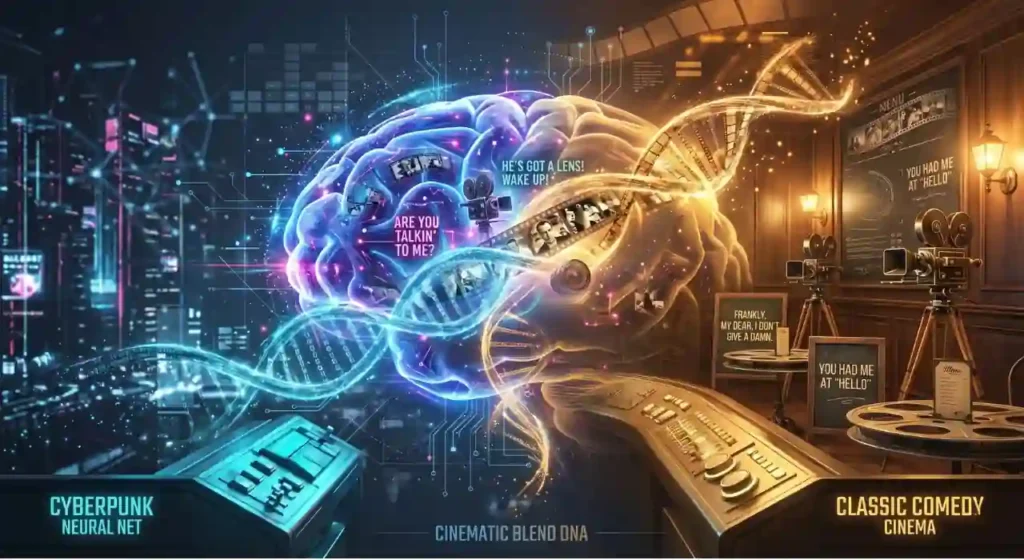
Part 5: Multi-Movie “Vibe Matching” (Blending Two Film DNAs)
What If You Want a Movie That Feels Like TWO Movies at Once?
You know the conversations where someone says “I want something that’s like Inception but also has the emotional weight of Interstellar” Or “something with the humor of Superbad but the heart of The Pursuit of Happyness.” You’re not looking for a sequel or a remake. You want something that sits in the middle of two films you already love.
Old tools couldn’t do this. You’d get recommendations for “movies similar to Inception” and “movies similar to Interstellar” separately, then manually dig through both lists hoping something overlapped. That’s exhausting, homework and not fun.
Movie Finder tools blend two movie DNAs directly. You put in both films. The tool doesn’t just find movies that match one or the other. It finds movies that sit in the intersection. Films that carry elements from both. The pacing of one, the emotional tone of the other.
This is the similar movie finder feature working at its best. It’s not just pattern matching on genre tags. It’s pulling from mood profiles, narrative structure, character depth, tonal consistency, and stacking those against two reference points simultaneously.
I tested this personally. I put in “Parasite” and “Knives Out” together. Both are smart, twisty, class-conscious films but they feel very different. One is suffocating tension, the other is a breezy puzzle box. The finding movie tool came back with films that actually balanced both qualities. Sharp storytelling with dark social commentary but delivered with a lighter hand. The results were genuinely good picks I hadn’t thought of myself.
That’s the power of blending film DNAs instead of just copying one. You stop getting the same 10 recommendations everyone already knows and start finding stuff that actually fits the specific combination of things you’re in the mood for right now.
For anyone who watches a lot of films, this feature alone makes movie identifier tool worth using regularly. Not just when you’ve forgotten a title. As an actual discovery tool.

Part 6: Failure in Dialogue and Scene Description (And Why It Still Beats Everything Else)
Nexora Tools sometimes struggles. Specifically with very dialogue-heavy searches and hyper-specific scene descriptions. It’s worth understanding why, because it actually tells you something useful about how to get better results.
When you type a specific line of dialogue that isn’t famous, the tool can miss. If you type something like “that scene where the guy says something like, I never asked to be the one who stays behind” and that line isn’t logged anywhere in the film’s public data, the tool has nothing solid to grab onto. It does its best with the emotional shape of the line. But it’s working with incomplete information.
Same thing with very obscure scene descriptions. “There’s this shot of a red bicycle outside a yellow building and a dog walks past.” If that scene isn’t described in any review or database entry for that film, the tool can’t magically pull it from thin air.
This isn’t a flaw unique to movie finder tools. This is a data problem. Every movie finder tool hits this wall. The difference is that Nexora Verse Tools at least tries to match the emotional and contextual weight of what you described instead of just returning zero results or obviously wrong ones.
Where it genuinely does better than any competitor is with famous dialogue. Find movie by quote works very cleanly when the line is recognizable. “I’m going to make him an offer he can’t refuse.” Done in one second. Even partial quotes with slight misremembering, “something about not being able to handle truth” still pulls the right result.
The honest move when the tool struggles is to shift your description. Stop focusing on the specific line. Describe the scene around it instead. The room, the mood, what just happened before that moment. Give the tool more surface area to work with and it almost always recovers.
That’s not a workaround. That’s just understanding how to communicate with a tool that thinks in context, not in exact strings.

Part 7: Dialogue and Scene-Specific Focus (The Fragment Search)
Most people think they need a lot of information to find a movie. Full plot. Character names. Release year. Director. The Tools has a specific mode built around this exact idea. The Fragment Search. You give it a piece. A single line of dialogue. A half-remembered scene. Even just a feeling attached to one specific moment. And the tool works outward from that fragment to find the full film.
This is find movie by quote working at a practical level. Not just for famous one-liners that everyone knows. For the stuff that stuck with you personally but probably isn’t on any “greatest movie quotes” list.
Say you remember something like “the part where the two brothers are sitting on a roof and one of them says something about their father never actually leaving.” That’s not a famous quote. It’s probably not indexed anywhere as a quotable line. But Nexora Verse Tools takes that fragment, reads the emotional content, the relationship dynamic, the setting detail, and searches for films where that combination of elements exists.
It’s basically working like a detective. One clue. Work backward to the answer.
For scene-specific searches, the same logic applies. You describe what you saw visually. “A woman standing in a kitchen alone at night. She’s not doing anything. Just standing there. The camera stays on her for a really long time.” Feed that into movie finder tool and it searches for films known for exactly that kind of slow, heavy, silent character moment.
This is how to find a movie by describing a scene in a way that actually produces results. Not keywords. A real human description of what you remember seeing.
The fragment search also works really well for foreign films. Bollywood, Korean, French cinema, all of it. Because the tool doesn’t require you to remember foreign dialogue word for word. You describe the emotional content of the scene in plain English and it still finds the match. That’s a genuinely big deal for anyone who watches global cinema regularly.
Part 8: Premium and Modern UI/UX (No Boring Design)
Most free online tools look like they were built in 2009 and nobody touched them since. Cluttered. Slow. Ads everywhere. Buttons that don’t quite work on mobile. You know the feeling.
AiTool is built completely differently. And honestly the design is one of the first things you notice.
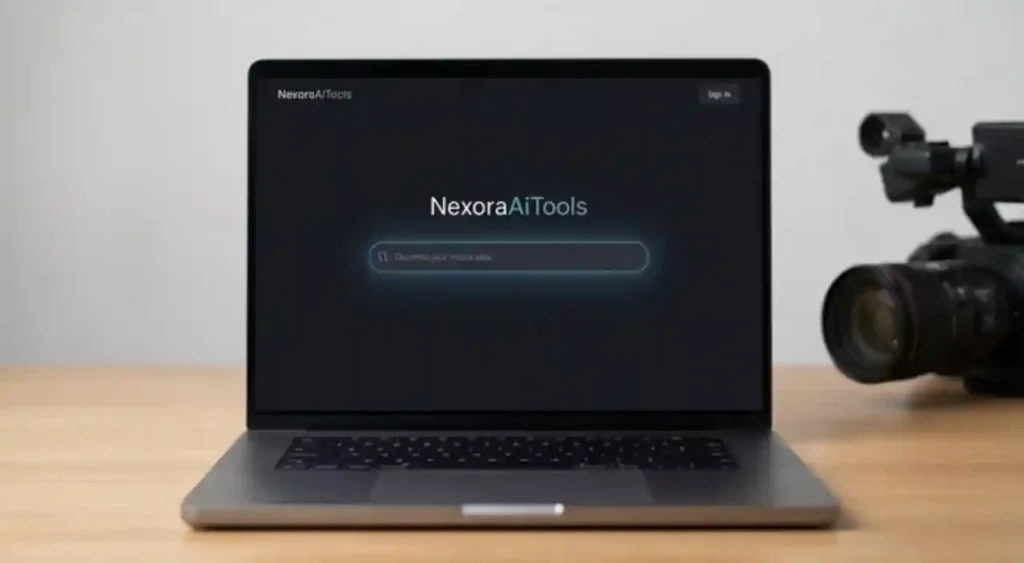
It’s clean without being boring. Dark mode that actually looks good, not just dark grey slapped over everything. The input area is front and center because that’s the whole point. You open the tool and you immediately know what to do. Type. Search. Done.
On mobile it feels just as smooth as desktop. No awkward zooming. No buttons that are too small to tap. The whole layout adjusts properly. This matters because most people searching for a forgotten movie are doing it on their phone, at night, half asleep.
The results page isn’t a wall of text either. Each result shows you enough to know immediately whether it’s the right film. Poster. Year. A short mood description. A match confidence indicator that tells you how closely your description lined up with that film’s profile.
That confidence indicator is actually a smart design choice. Instead of pretending every result is equally good, the tool tells you upfront which matches it’s most confident about. That kind of honesty in a UI builds trust fast.
Navigation between the four modes, description, plot, quote, image, is smooth. You don’t have to go back to a homepage every time you want to switch. It’s all right there, one tap away.
Movie finder online free tools usually make you pay for the good experience with your patience. Slow load times. Clunky interfaces. The tool speed is fast, the design respects your time, and nothing feels like it was built just to keep you clicking around longer than necessary.
Part 9: The Human Story (Built by a Cinephile, for Cinephiles)
Most tech tools come from a boardroom. Someone sees a market gap, hires a team, ships a product. The people building it have never actually felt the problem they’re solving. And you can feel that disconnect the moment you use the tool.
The Tools doesn’t feel like that. And when you dig into the story behind it, you understand why.
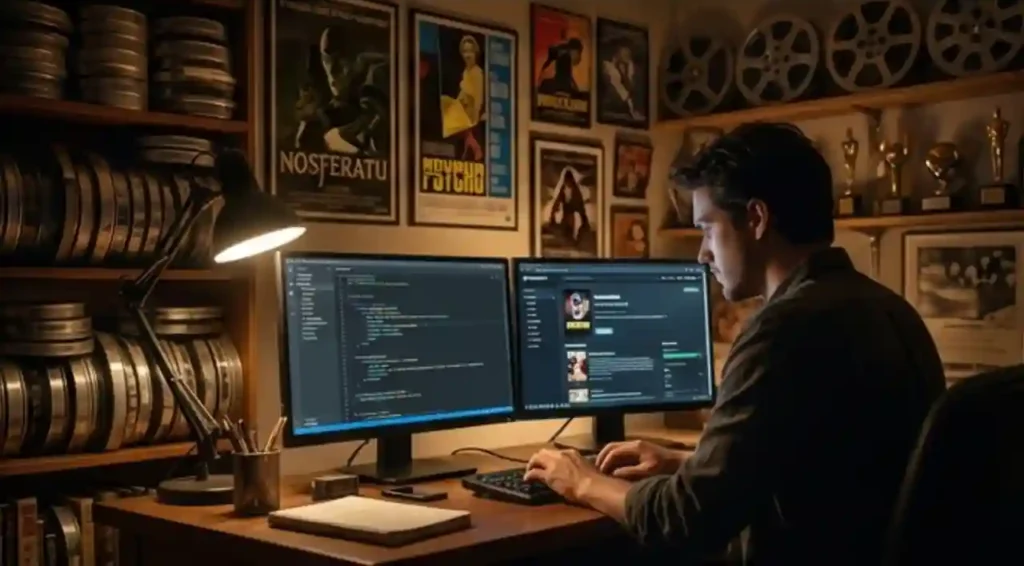
The person behind this wasn’t a startup founder looking for the next big thing. They were a film obsessive. The kind of person who has strong opinions about aspect ratios. Who stays up till 3 AM watching a 1970s Italian film with burnt-out subtitles just because someone on a forum mentioned it once. Who keeps a running list of movies they want to watch and another list of movies they half-remember and need to find someday.
That second list is where Nexora Tools came from.
It started as a personal problem. Too many half-remembered films. Too many failed Google searches. Too many Reddit posts that never got answered. So instead of waiting for someone else to fix it, they built the fix themselves.
That origin matters more than it sounds. Because when you build something for yourself first, you build it honestly. You don’t cut corners on the features that actually matter. You don’t prioritize things that look good in a pitch deck over things that work in real life at 1 AM when your brain is foggy and you just need to find that movie.
Every design decision in Describe movie for finding tool traces back to a real frustration a real movie lover had. The fragment search exists because forgetting a full plot but remembering one scene is painfully common. The vibe matching exists because “just give me something similar” is how every film conversation actually ends. The Bollywood support exists because non-Hollywood cinema deserves the same quality tools, not an afterthought checkbox.
This is a tool built by someone who felt every one of these problems personally before writing a single line of code. That’s rare. And it shows in how the tool actually behaves when you use it.
Part 10: The “No-Sign-Up” Freedom (Privacy Factor)
Almost every useful tool online today hides behind a wall. Create an account. Verify your email. Set up a profile. Allow notifications. And somewhere buried in the terms you didn’t read, your data is being collected, stored, and used for something you didn’t agree to consciously.
Tools skips all of that completely.
You open it. You search. You get results. No account. No email. No phone number. No “sign up to see more results” popup cutting you off right when you’re getting somewhere useful.
This isn’t just convenient. It’s a privacy statement.
Most people don’t think about what happens when a movie finder app knows your watch history, your search patterns, and your email address. That’s actually a detailed picture of who you are. Your taste in films tells a lot about your politics, your emotional state, your age, your background. That data is valuable to advertisers. And most free tools are quietly selling it.
Forgot movie title but remember quote tool doesn’t build that profile on you because it never asks you to create one. Every search is clean. Nothing is stored against your name because there is no name in the system.
For people who care about privacy, this is a genuine reason to choose this tool over others. For people who don’t think about privacy much, it still means a faster and cleaner experience. No friction between you and your answer.
The no-sign-up approach also means you can share it freely. Send it to your friend at midnight. Send it to your parent who can’t remember the name of that film they watched in the 80s. They don’t need to figure out any account setup. They just open it and use it. That accessibility is the whole point.
Simple. Private. No strings attached.
Part 11: The Ad-Light / Anti-Pop-Up Guarantee
You find a free tool online. Looks promising. You click in. Before the page even loads properly, a pop-up blocks the screen asking you to subscribe to a newsletter. You close it. An auto-play video ad starts in the corner. You mute it. You type your search. The results load. You go to click the first result and accidentally click a disguised ad that opens a new tab selling you something completely unrelated.
That’s not a website. That’s an obstacle course.
Most free movie finder online tools run exactly like this. Because their entire business model is built on your frustration. Every accidental click, every forced scroll past three ad blocks to reach the actual content, every pop-up you have to close twice, that’s money for them. Your annoyance is their revenue stream.
These ai Tools made a different choice. Deliberately.
The tool runs ads. That’s honest and that’s fine. Keeping a database updated, running AI models, maintaining fast servers, none of that is free. Ads pay for it. But there’s a massive difference between ads that exist and ads that attack you.
On Nexora Verse Tools the ads sit where ads are supposed to sit. On the side. At the bottom. Clearly labeled. They don’t jump in front of your search results. They don’t auto-play sound. They don’t follow your cursor around the screen. They don’t pretend to be content.
You can actually use the tool without fighting it. Which sounds like the bare minimum but somehow most free tools can’t manage it.
This also matters for mobile users specifically. Pop-ups on mobile are ten times more annoying than on desktop because they’re harder to close and easier to accidentally click. Nexora Tools on mobile stays clean. The search experience on a phone feels the same as on a laptop. No surprise redirects. No fullscreen ads between your search and your results.
The ad-light approach is a trust decision more than a design decision. A tool that respects your attention keeps you coming back. A tool that attacks your attention loses you after one visit.
Part 12: Hourly Database Updates and Leaks Integration
You’re searching for a film that just released. Or a title that got buzz this week from a festival. Or something that just dropped on a streaming platform three days ago. You type it into a movie finder tool and it comes back with nothing. Or worse, old incorrect information.
That’s a database problem. Most movie finder tools update their databases slowly. Weekly at best. Monthly in some cases. They’re always running slightly behind the actual world of cinema.
That means when something new drops, when a trailer leaks, when a film gets a surprise streaming release, when a festival darling suddenly becomes available, AiTools knows about it fast. Usually within the same day it becomes publicly known.
This matters especially for people who follow film culture closely. If you’re the kind of person who checks A24’s social media regularly or follows Korean cinema releases or tracks Bollywood release dates, you need a tool that keeps up with you. Not one that’s three weeks behind.
The leaks integration is worth talking about separately. Film leaks meaning early trailers, unannounced release dates, festival screening lists, that information circulates fast on social platforms. Dedicated film communities on Reddit, Twitter, and Discord pick this stuff up within hours. Movie dialogue finder tool pulls from these public signals and integrates them into its database update cycle.
So if a movie gets a surprise announcement and film Twitter goes wild about it on a Tuesday morning, Find movie title from dialogue tool reflects that by Tuesday afternoon. You can search for it, read about it, and find similar films to watch while you wait for it.
For anyone who takes cinema seriously, that kind of real-time awareness is the difference between a tool that feels alive and one that feels like a museum exhibit.
FAQs
How do I find a movie when I forgot the name?
Just describe it. Open NexoraAiTools, type whatever you remember, the vibe, a scene, a feeling, even one small detail, and let the tool do the work. You don’t need the title. That’s literally the whole point.
Can I find a movie by describing a scene?
Yes, you don’t need to be precise. Write it the way you’d tell a friend. “There’s this scene where two people are arguing in the rain and one of them just walks away.” That’s enough to start narrowing it down.
Is there a movie finder by photo or image?
Yes. Nexora Verse Tools has an image upload feature. You drop in a screenshot, a still, or even a blurry photo from your phone, and the tool identifies what movie it’s from. It works surprisingly well even with low quality images.
How do I find a movie by a quote I half-remember?
Type it in as close as you remember it. Don’t worry about getting every word right. NexoraAiTools reads the meaning of the line, not just the exact words. Even a rough paraphrase usually pulls the right result.
Does Nexora Verse Tools work for Bollywood movies too?
Absolutely. Bollywood is fully supported. You can describe a Hindi film in plain English and still find it. The database covers Indian cinema properly, not as an afterthought like most Western movie tools do.
Do I need to create an account to use it?
No. Zero sign-up required. You open the tool, you search, you get results. No email, no password, no profile setup. Nothing stored against your name.
Is Nexora Verse Tools free to use?
Yes. It’s totally free. You can use the tool anytime as you want.
awosome service you provided. keep it
thanks
recently i was with my friend and she talk about some movie details like Superhero first goes to ocean deep and found a key for controlling attacking… but she forget the name of movie then i ask the movie name on nexora tool and the magic tool gave the name of movie which was Mission Impossible last part. Tool are great and when i read the article for working the tool i was shocked on owner how he make it.
thank u and enjoy your movie
Nexora tools are such an amazing tools when i search a movie name just a simple line then i was shocked the name of movie are infront of meeeee. Bro literly did an amazing work and this tool help me in a lot of things like when i forget the movie name then this tool saved my history and boommmmm.
thanks Ahmad and i am really happy for my tool performance.